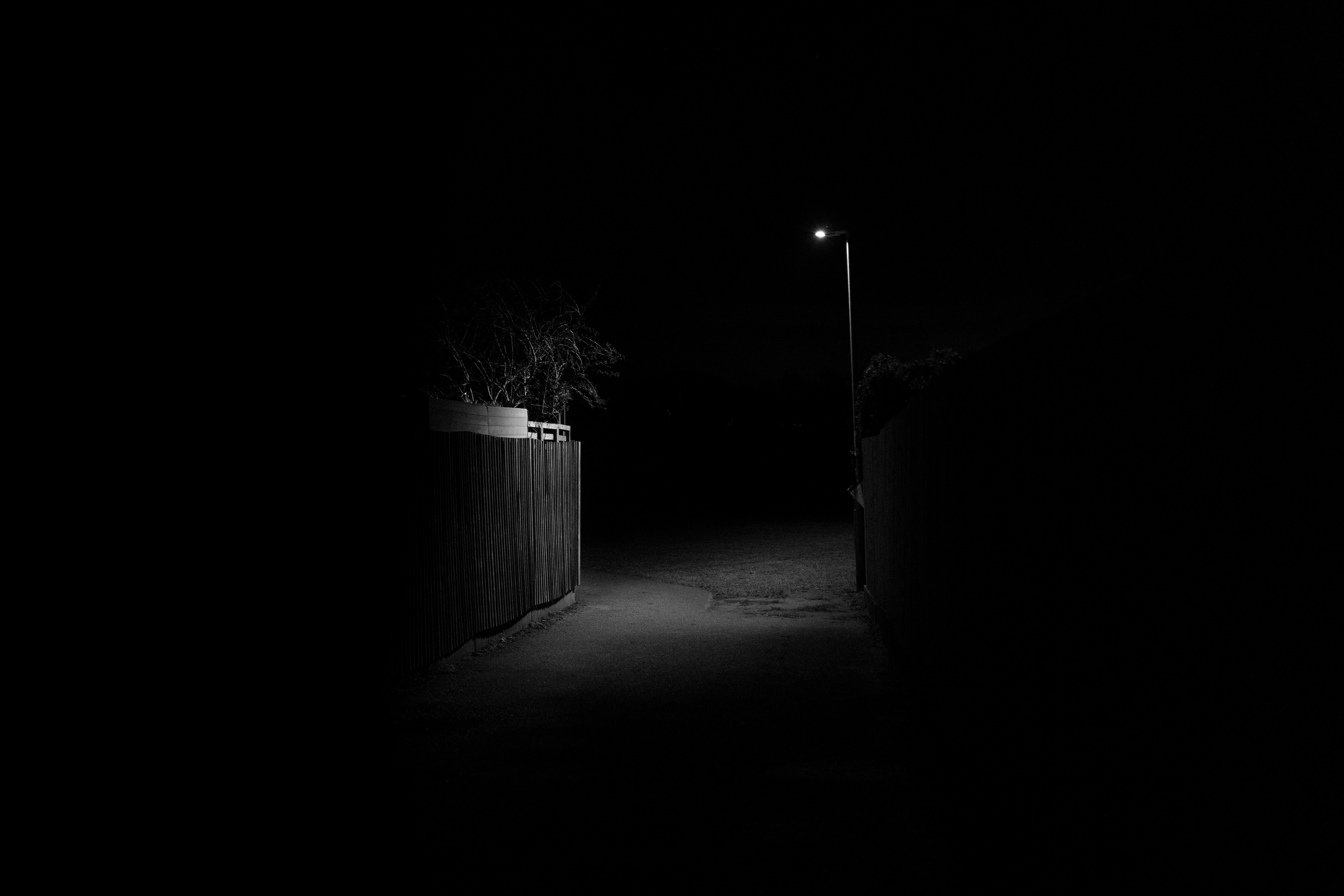
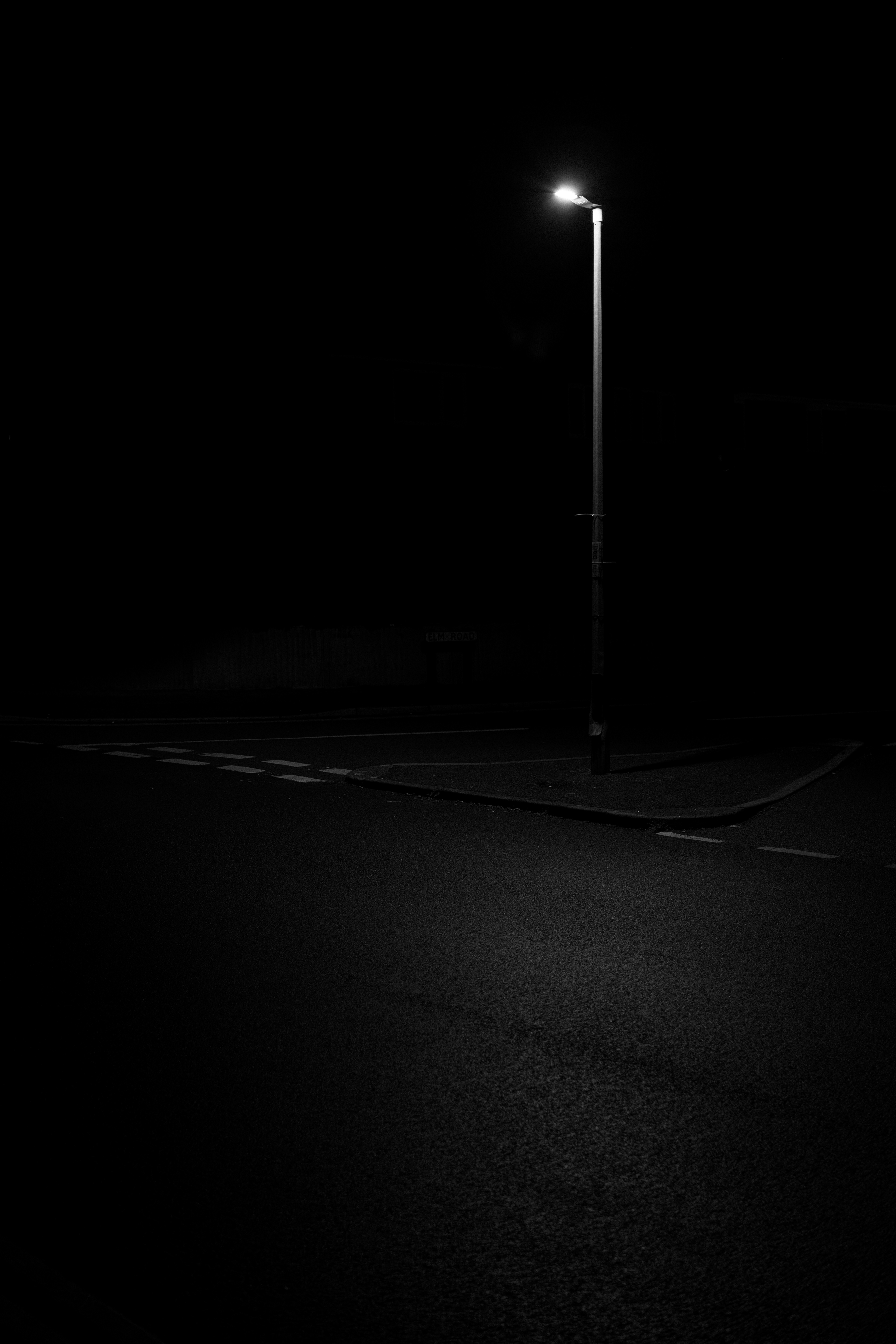
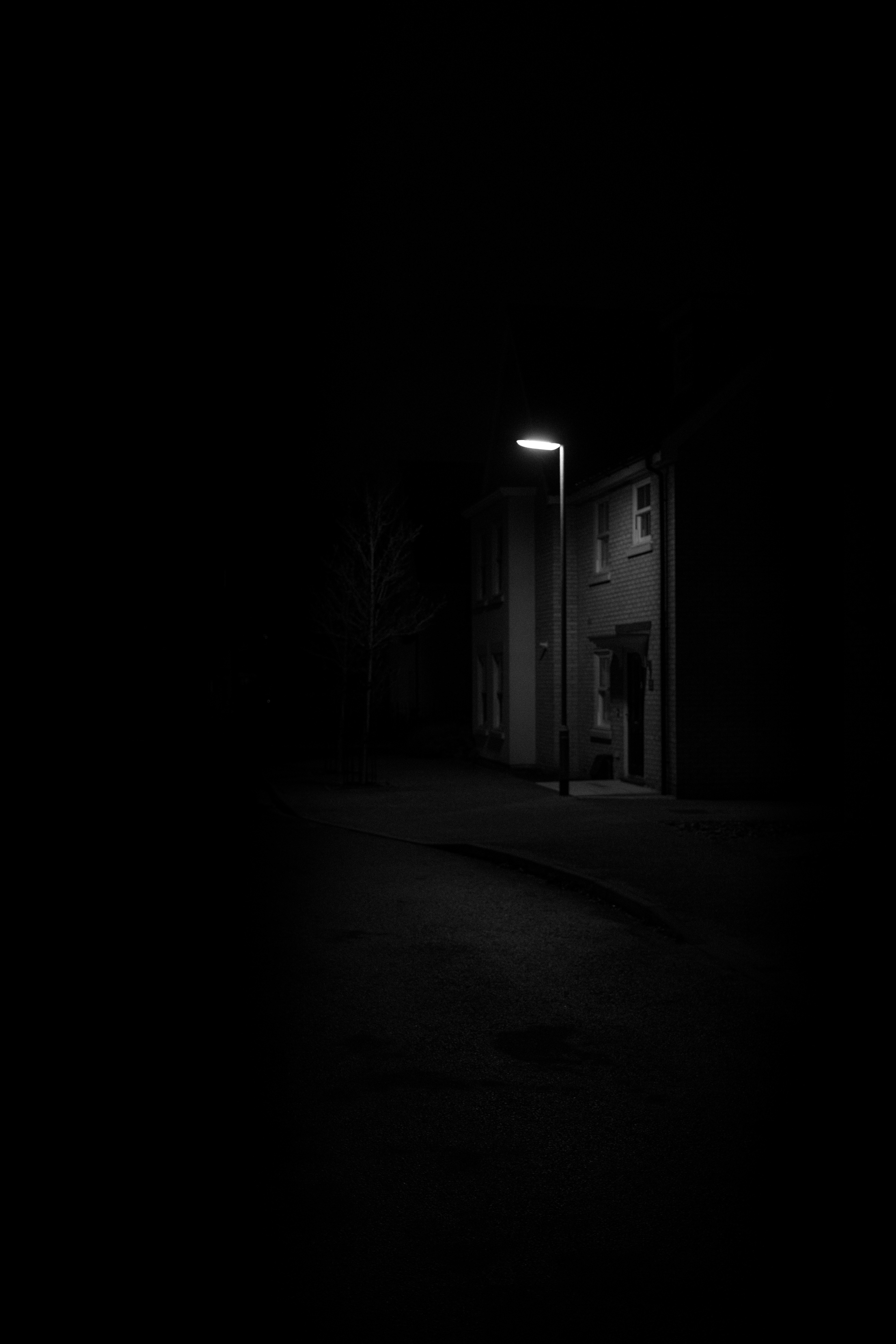
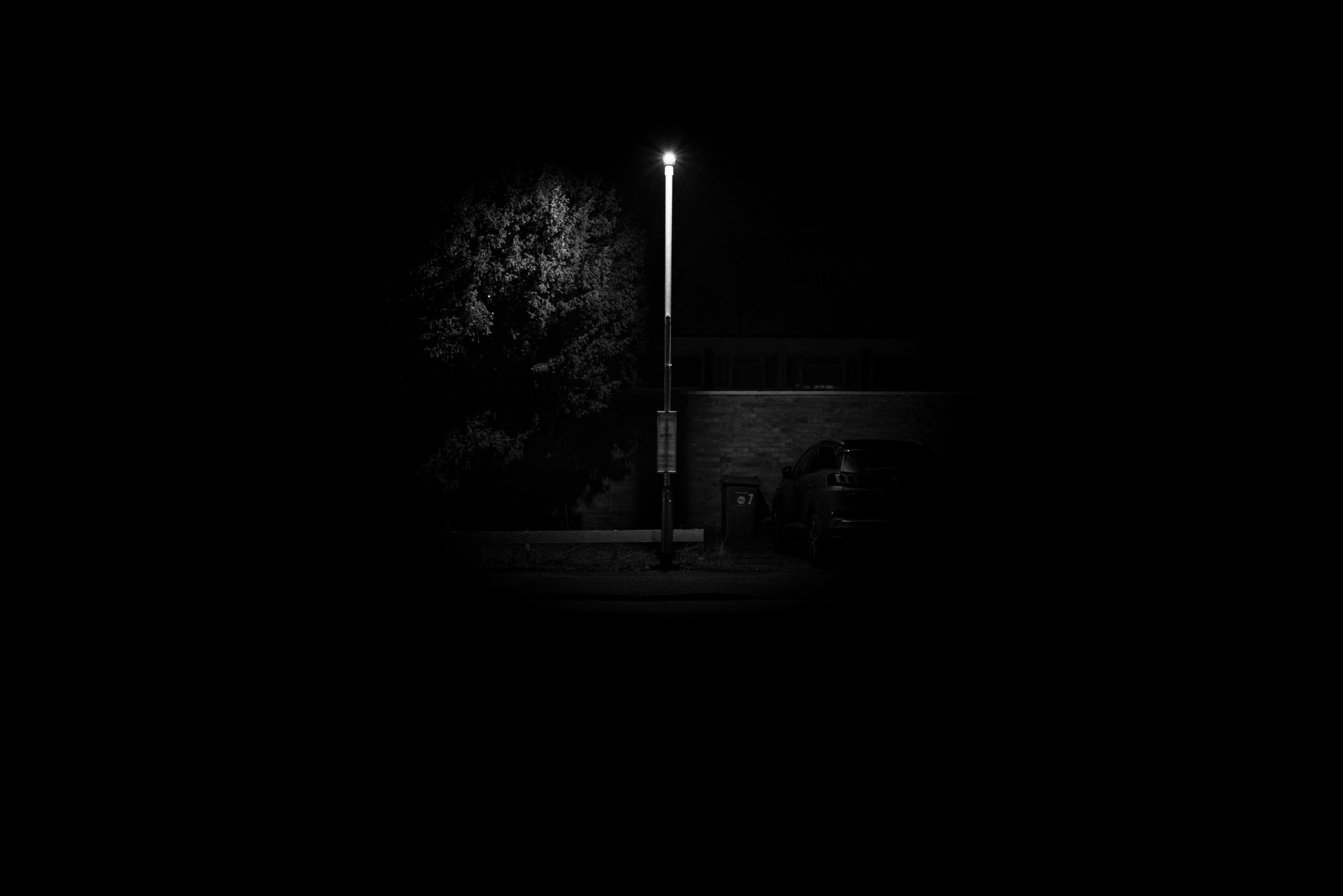
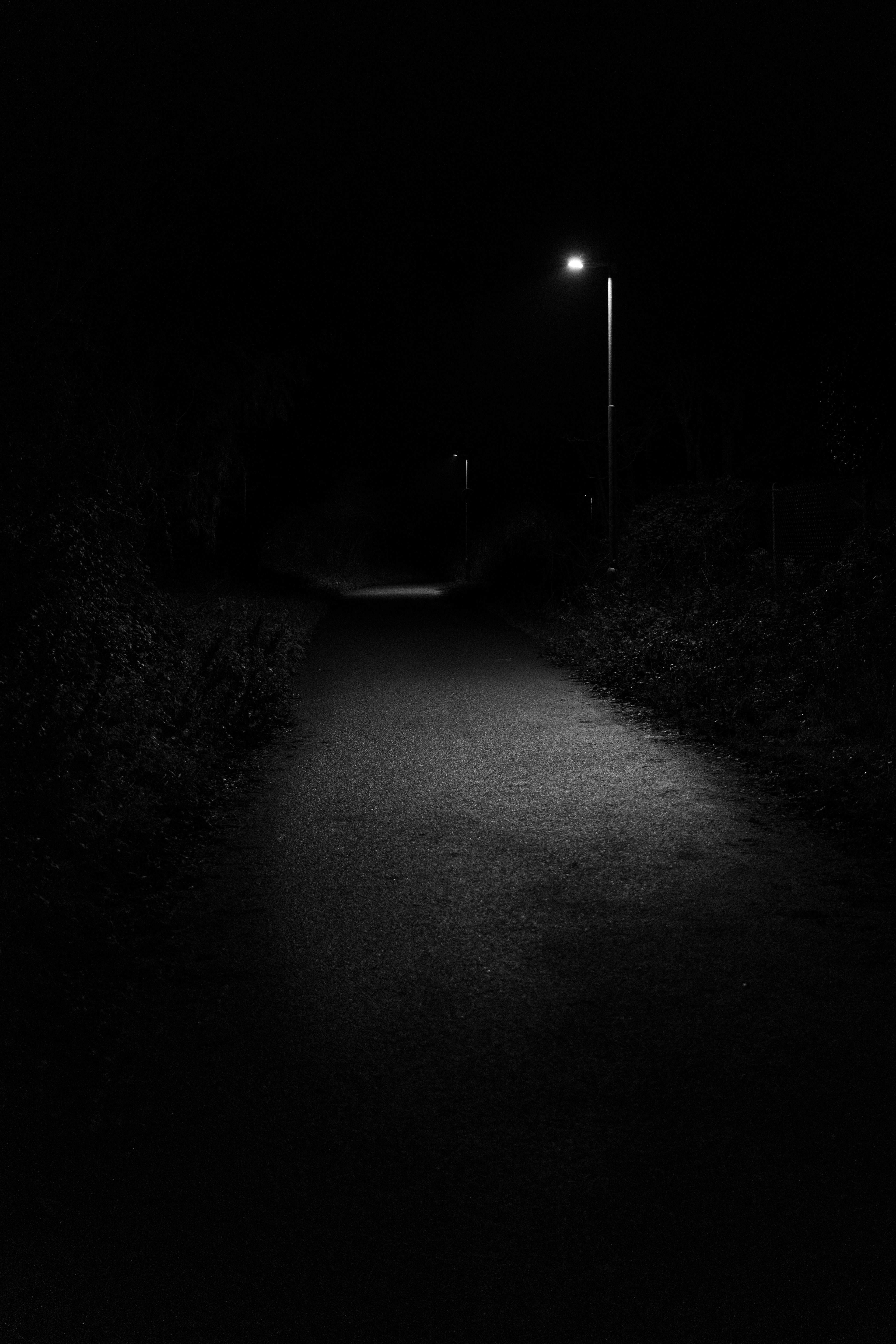
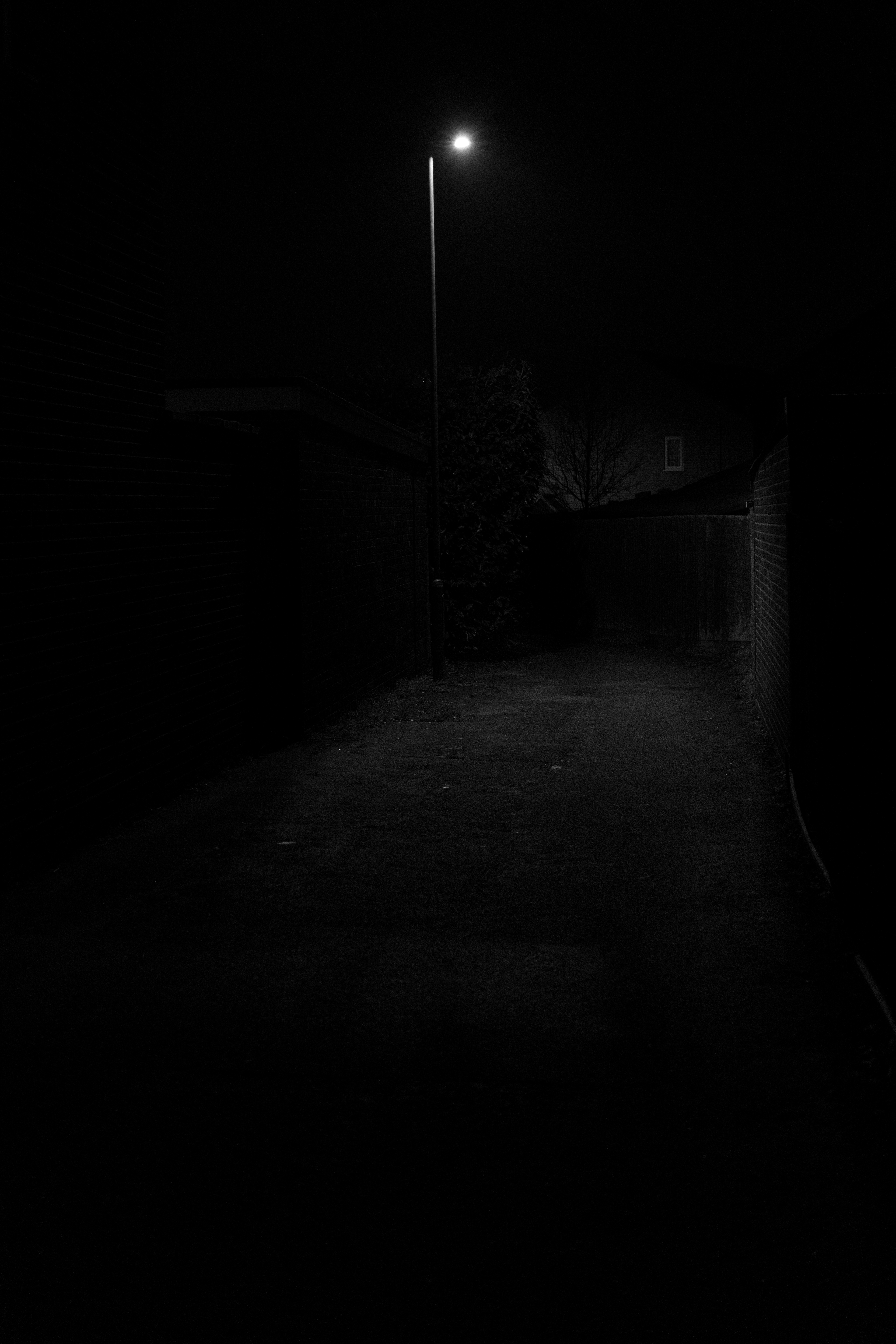
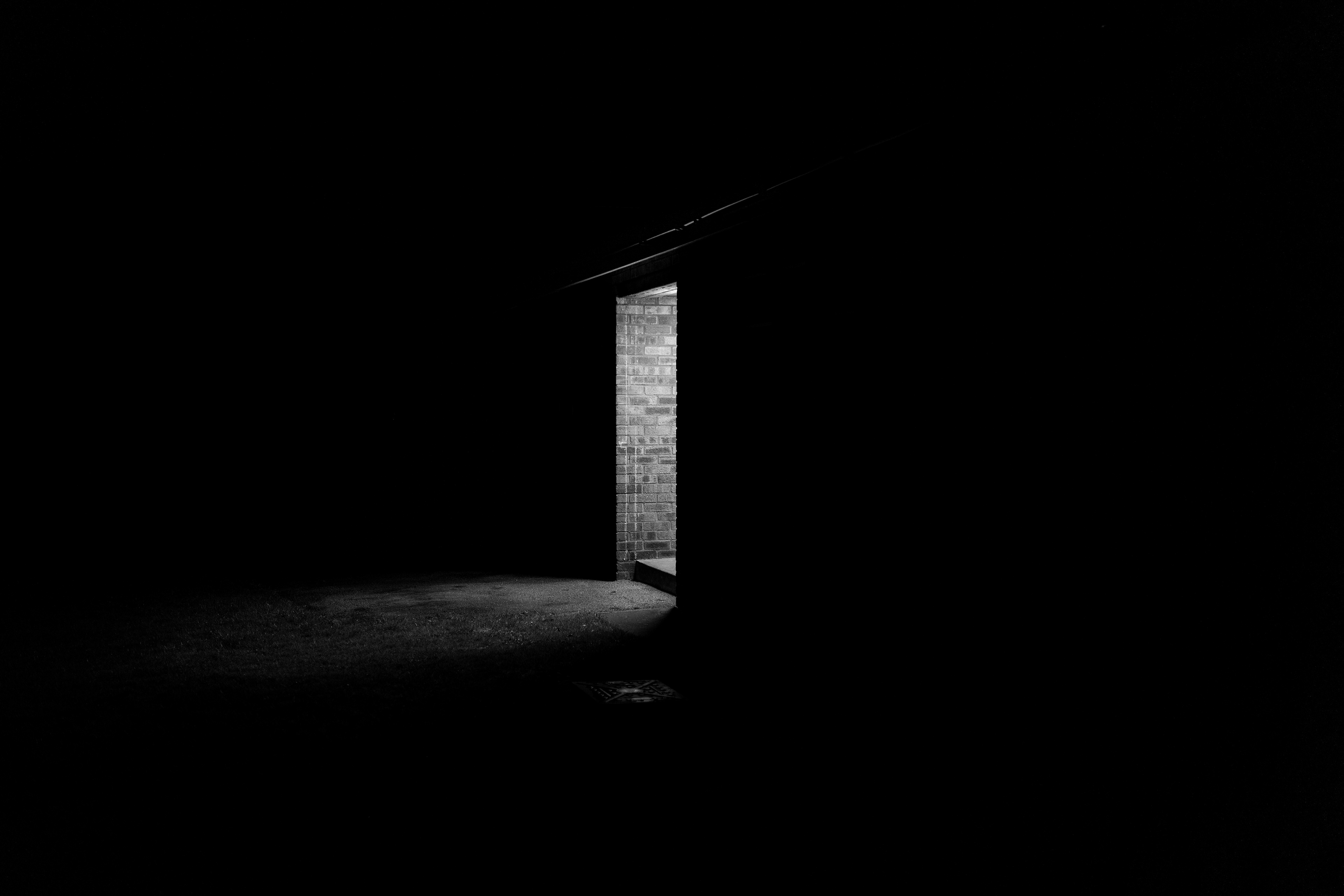
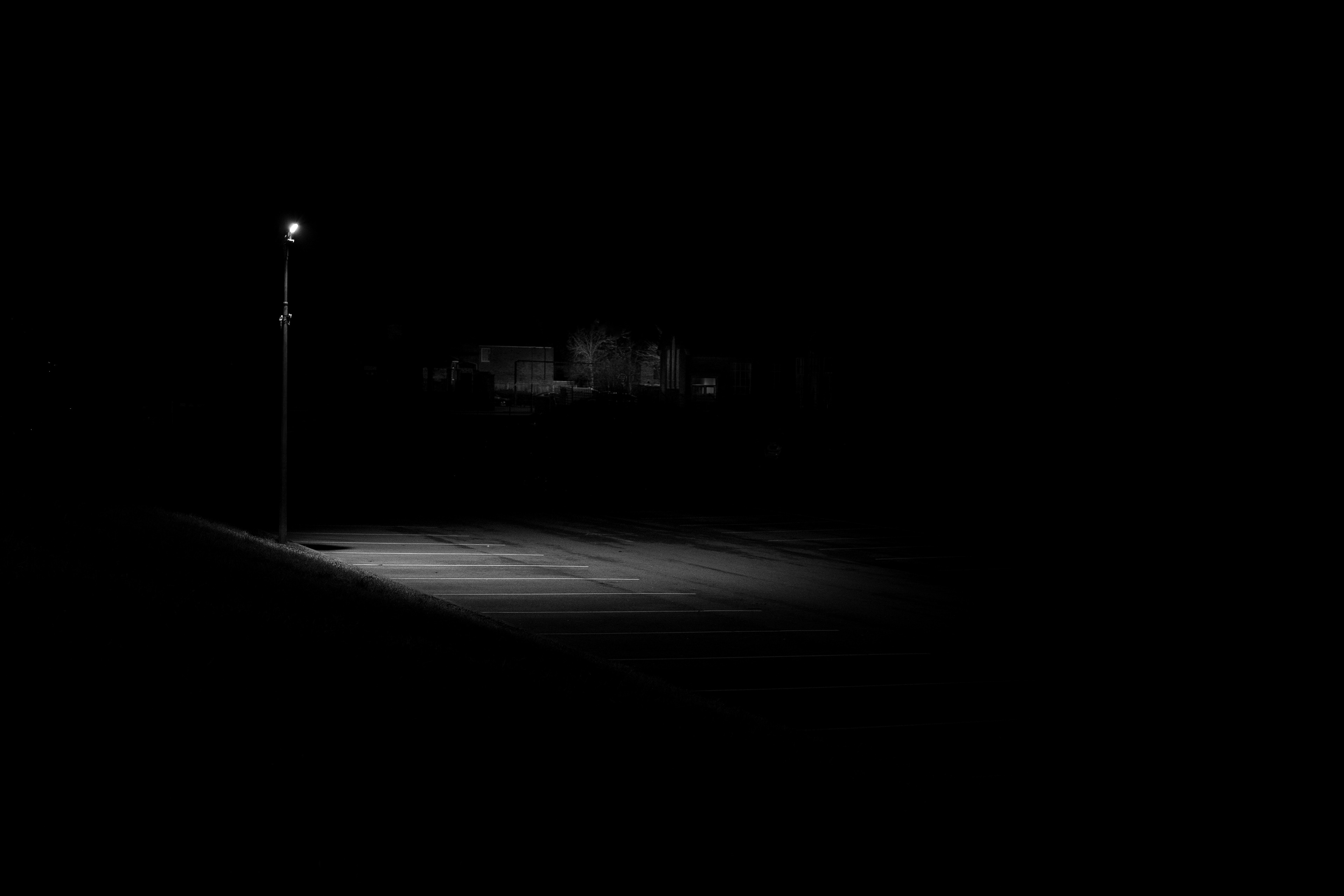
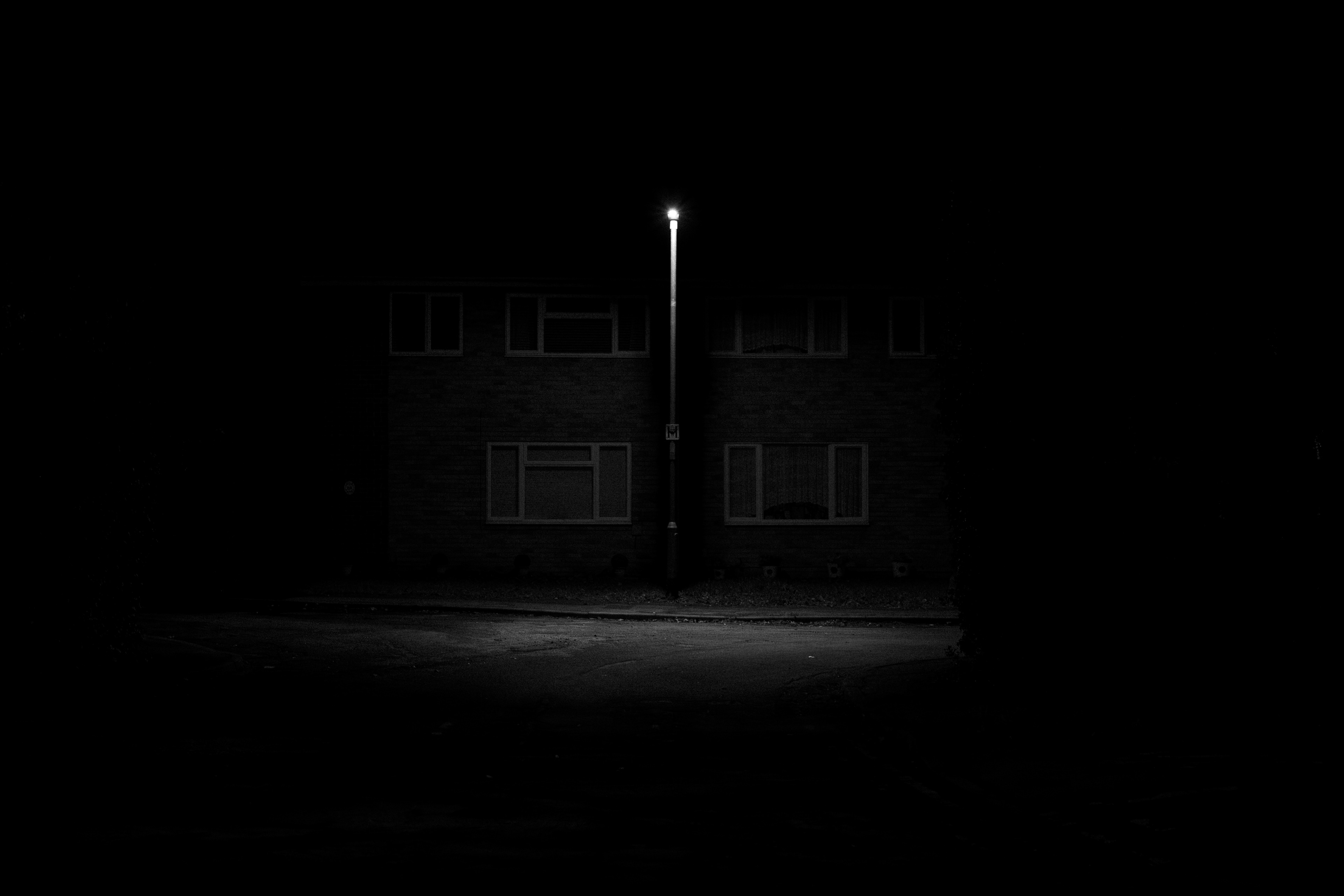
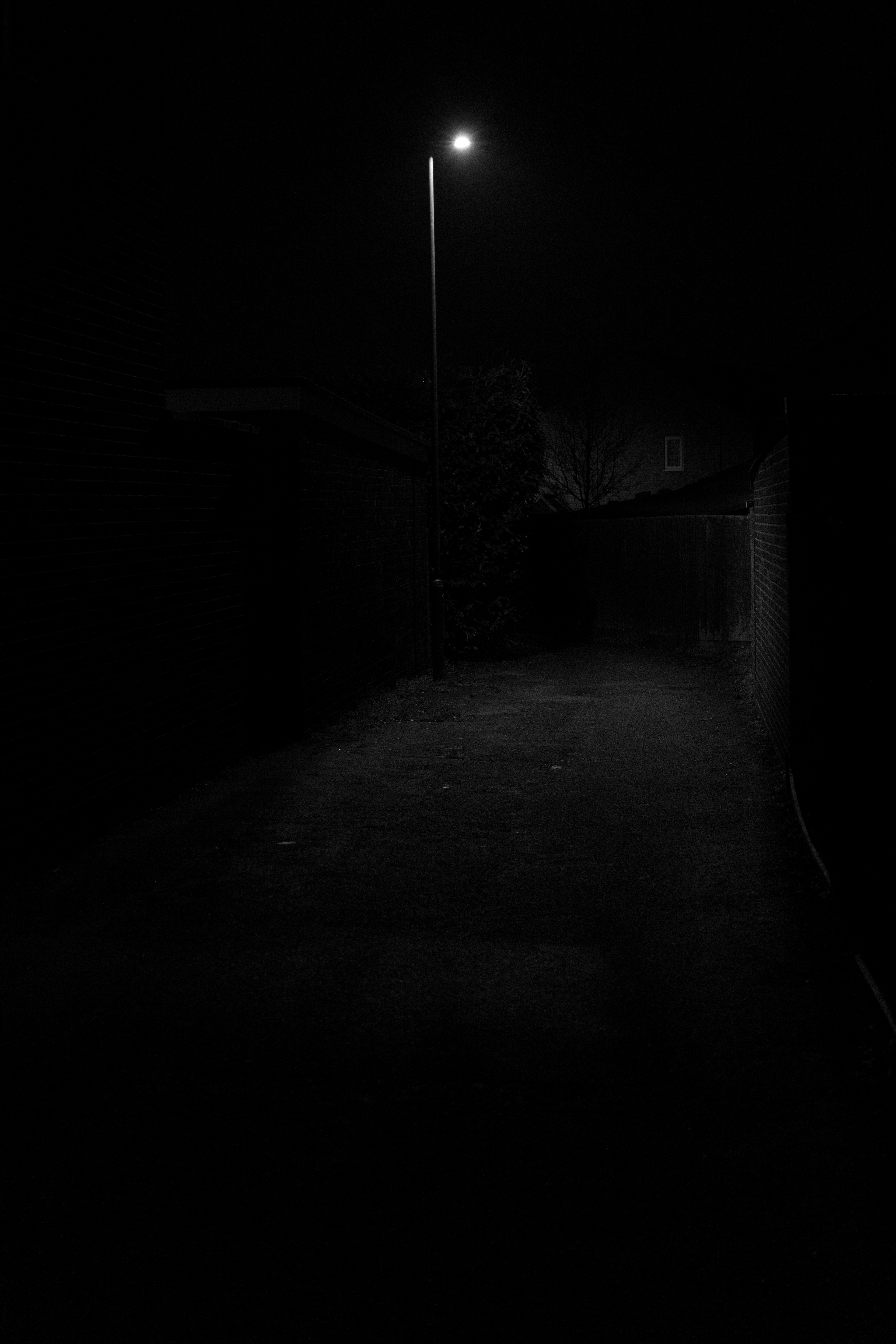
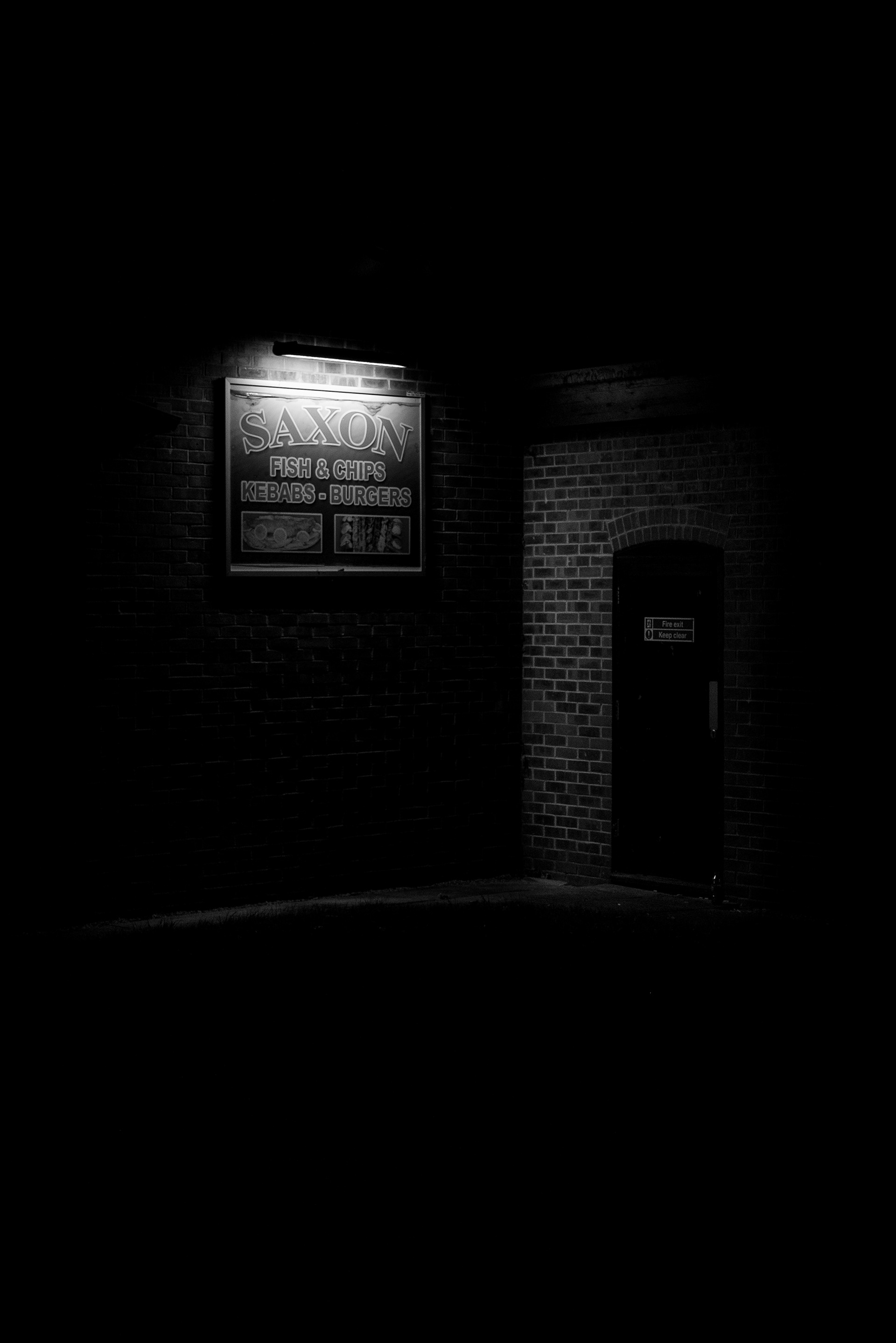
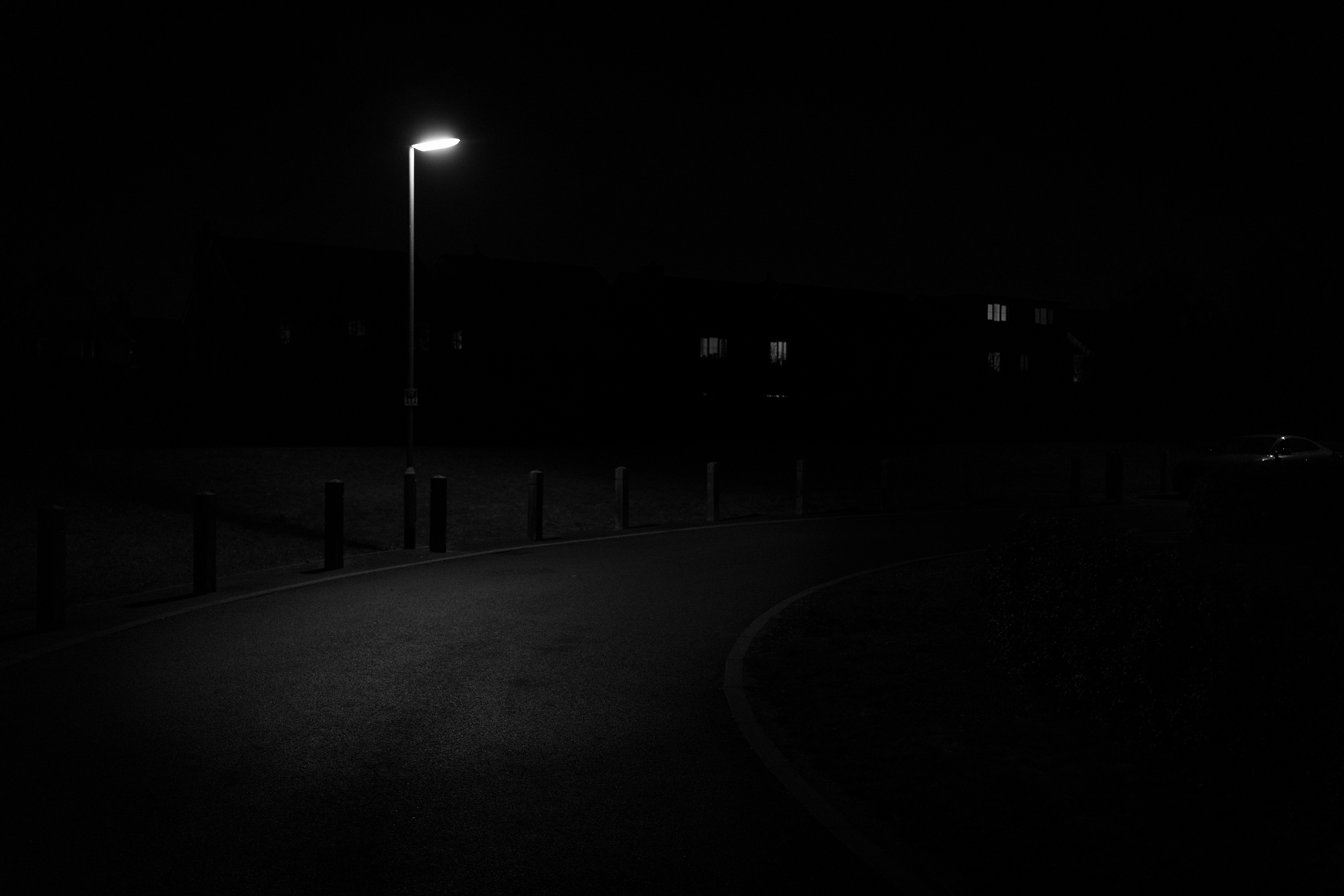
Hometown is a body of work about familiarity turned strange.
I grew up in this town when it had rhythm: people moving through it, events that punctuated the year, places that felt inhabited rather than merely occupied. Over time that life thinned out. What remains is not ruin, but something quieter and harder to name — a town that still functions, yet feels hollow once its daily purpose has passed.
These photographs are made at night, when the routines of work and transit fall away and the town is left to itself. Street lamps, houses, vacant streets and uneasy sightlines become the dominant features.
Nothing dramatic happens. Nothing resolves. The scenes are banal, static, and slightly uncomfortable; exactly as the place feels to me now. The absence is the subject.
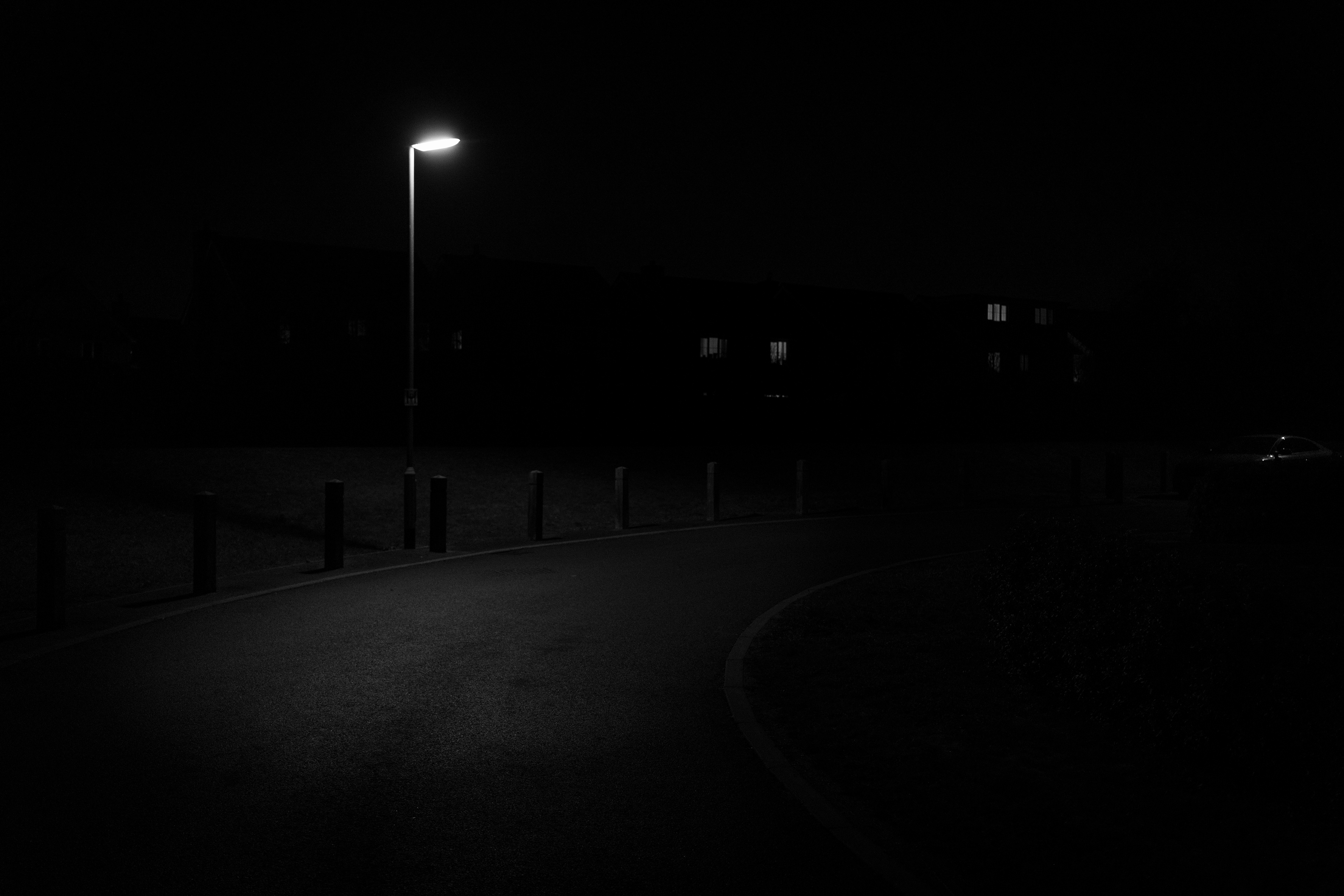
Working exclusively in black and white strips the images of nostalgia or spectacle. Light becomes blunt rather than decorative; architecture feels provisional, exposed. What is shown is not decline in a romantic sense, but a shallow persistence — a town continuing without the depth or energy it once carried.
Hometown is not an act of accusation, nor an attempt to reclaim a past version of the place. It is a quiet record of what remains when communal life recedes, and of the uneasy relationship between memory and the present. These images reflect how the town feels to inhabit now: empty, functional, and strangely indifferent — a place that exists, but no longer seems to belong to anyone.